01 / 04 — Ohme
Bringing development in-house
An international WordPress estate, supported from within the marketing team.
The brief
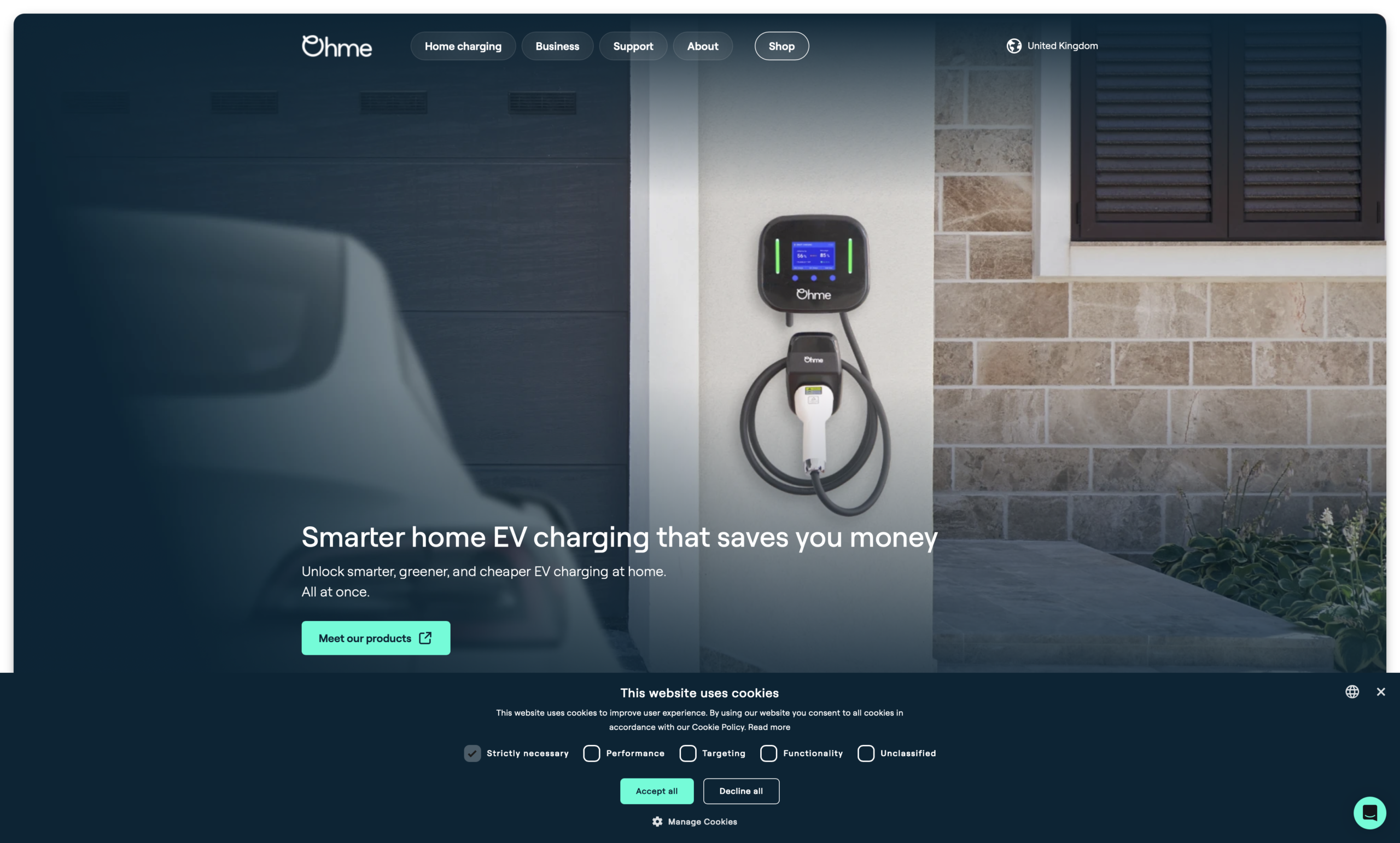
I joined Ohme as a WordPress Developer in August 2024, taking over work previously handled by an external contractor. The website was already live: my role was to understand the existing platform, keep it dependable and develop it alongside the needs of a growing international business.
Working within Marketing meant balancing new campaigns with everyday publishing and technical requests. A helpdesk workflow gave stakeholders a clear way to raise work and helped me prioritise delivery across the website estate.
Design and development, together
Designers supplied high-fidelity layouts for implementation. I worked through the practical details of turning those designs into responsive components, contributing ideas where the visual direction and the needs of content editors met.
The work extended beyond individual pages. I took ownership of the WordPress theme and later a bespoke calculator plugin, maintaining existing functionality while introducing new capabilities.
02 / 04 — Ohme
A platform for the people using it
Reusable building blocks for campaigns, content and regional teams.
Flexible publishing
I developed Gutenberg hero options that let editors choose image or video, square or rounded treatments, and full-screen or fixed-height presentation. Those choices brought flexibility into the publishing workflow without requiring a fresh template for every variation.
Promotional landing pages were built from supplied designs. I also worked with colleagues on content, imagery and translations, and built two regional variants as part of an estate spanning multiple locales.
Helping customers help themselves
The Help Centre brought customer and installer guidance into an accessible, structured part of the site. Its purpose was to make useful answers easier to find and reduce the need to contact the support team for routine questions.
A separate partner Help Centre introduced specialised accounts and gated access. Shared article URLs made it possible to direct the right people to the relevant guidance while respecting that access model.
03 / 04 — Ohme
Connecting the website to the business
The work behind the interface mattered as much as the interface itself.
Enquiries into Odoo
Ninja Forms handled enquiries and leads on the website. I worked with the Data team on the mapping between form fields and Odoo, paying attention to how the payload moved information from the front end into the business’s systems.
This was a collaborative integration task: the form experience, submitted data and downstream requirements all needed to agree.
Hosting and operational ownership
I liaised with WP Engine on hosting matters, including a package upgrade. Maintaining a live international site meant understanding the platform around the theme as well as the code inside it.
Alongside feature development, I handled fixes and upgrades so the publishing team could continue working with the site.
04 / 04 — Ohme
A dependable delivery rhythm
Local development, staging review and controlled releases.
Review before release
I used separate local, staging and production environments. Staging gave stakeholders a place to review work and identify issues before changes reached the live site; live content remained part of the ongoing publishing workflow.
GitHub Actions compiled and deployed the relevant staging and production branches. This gave development work a repeatable route into the environments where it would be reviewed and used.
What this work represents
Ohme was an ongoing platform role, rather than a single website launch. The contribution combined responsive implementation, editor-facing features, integrations and operational support.
It brought development closer to the people commissioning and publishing the work, with a consistent process for turning their requests into maintainable changes.